There's no place like home: A D3 homecoming series with Jamie Norton

A big thanks to Bombas for their support this fall. You train hard. Your socks should work just as hard. Trust us they make all the difference. Use code GloryDays21 for 21% when you checkout on Bombas.com
Home
“Home’s where you go when you run out of homes.”
― John le Carré
It’s not that “home” is a place that can’t be created outside of what was once familiar to us, or that belonging fails away from our roots, or that home is a last resort. The fact is simply that “home” is often an unparalleled comfort, a refuge, a place where we can be our true selves.
For coaches Jamie Norton of Tufts, Nicole Kramer of Calvin, and Sarah Burnell of Grinnell, “home” is the place that each hopes to shape into something even better than what shaped them. As alumni returning to their alma maters now as head coaches, coming home is not just exciting–it’s personal.
“There’s probably a little bit more–maybe subconscious, self-imposed–pressure knowing the legacy of the program and wanting to be a good steward of that,” Norton said. “It feels a little more personal, right? It shifts my perspective on what the program can and should be. It makes it feel a little bit more meaningful when we have success.”
For Kramer, a student-athlete career at Calvin is what inspired her to go into coaching, making the opportunity to coach at her alma mater even more special.
“From my time as a Knight, as a student-athlete from 2006 to 2010, I learned a lot and I think it really helped give me a framework, not only for my career path, but definitely the kind of program that I wanted to be leading and coaching for,” said Kramer.
For Burnell, the idea of returning to Grinnell has always felt authentically romantic.
“It means everything to be back in Grinnell,” said Burnell. “This is kind of my dream job and my dream place. And I’m just really grateful that the stars aligned.”
Hear from all three coaches on how their experiences away from home brought them back and equipped each of them to lead their programs to continued successes in this four-week series.
Jamie Norton raises the bar
When his first-born was three weeks old, Jamie Norton got on a plane and flew across the country for a job interview. After over a decade in various coaching roles at North Central, Williams, and La Verne, one job he always had at the back of his mind had finally opened: the Director of Track & Field/Cross Country role at his alma mater, Tufts.
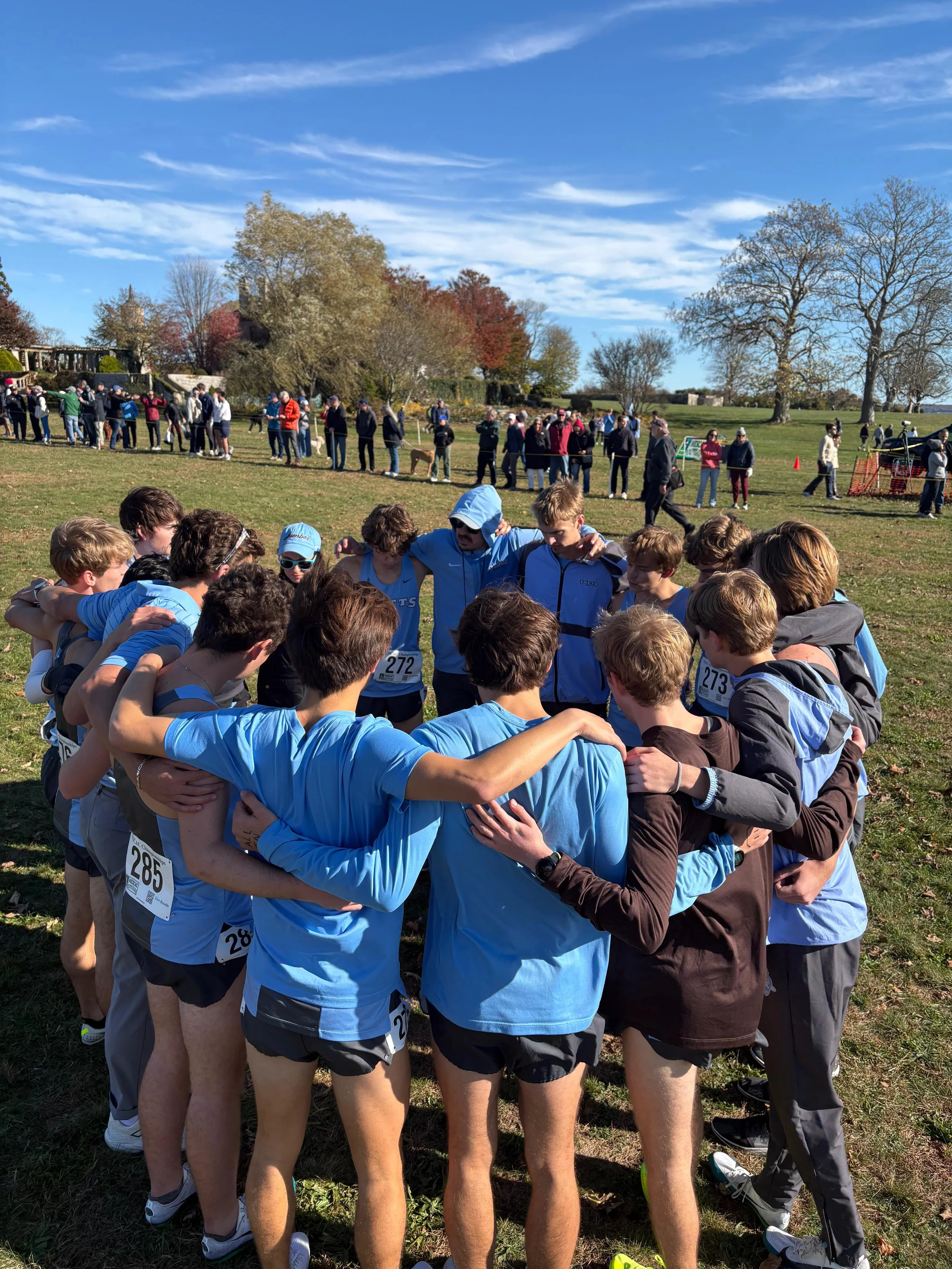
“[It] felt like such an exciting opportunity to potentially have the chance to come back,” Norton said, “and play a role in building on the success that this program has had for many years, building a great community here that extends beyond the current team, and apply all the things that I’ve been learning in all these different roles to a place that means a lot to me and that I think is very well set up for success.”
Norton, who in 2014 had just emerged from Tufts with a shiny, new degree in international relations and economics and a still-standing school record of 4:06.38 in the indoor mile, did not initially see coaching as his path forward. However, when he found himself staying local after graduation and learning his college coach needed an extra set of hands while growing his family, it seemed like a logical next step. Norton filled a volunteer assistant role for a year and quickly fell enraptured.
“Over the course of that year, I was like, well, if I’m investing all my time in this and not even getting paid, but enjoying doing it that much, maybe this is something that I should think about trying to make a career,” Norton said.
A year later, he accepted a GA position for powerhouse North Central men’s cross country and track and field teams, where he worked under the legendary duo Al Carius and Frank Gramarosso, who he endearingly refers to as “Al and Grammy.”
“It was really eye-opening going to North Central, a program that has obviously for 50 years been operating at the highest, highest level,” Norton said.
He went on to explain that one of the key pieces to the program’s success and a philosophy that has stuck with him was the coaches’ ability to set boundaries with the time they invested into the team.
“Al and Grammy felt very strongly that to sustain the careers that they had, they also needed to make sure that they had the time to themselves,” Norton said. “Knowing when I need to prioritize taking care of myself and my own well-being, and encouraging my staff to do the same, was definitely important for me, especially now having a family and young kids, to see that model.”
Following his time at North Central, Norton was privileged to then work as an assistant with another Hall of Fame coach, Pete Farwell, as well as with notable Williams alum Dusty Lopez at Williams College, another program with a long history of success.
“Being able to learn from some of the best coaches that have ever done this [helped me to] synthesize my own philosophy,” Norton said. “It’s a Venn diagram, right? There’s certain things that overlap between the two programs that make you think, okay, maybe these are some of the real critical parts of success. But also in some ways [there are] very different ways of operating in very different program cultures. There’s not necessarily a one-size-fits-all approach to building a high-level team.”
Norton’s experiences at North Central and Williams finally landed him his first head coaching role in 2021 at SCIAC school La Verne, where he led the men’s and women’s cross country and distance programs for three years. Here, he helped the men’s team post three consecutive top-ten West regional finishes and led the women’s team to their best West regional finish in ten years. Under Norton’s tutelage, distance athletes at La Verne broke 11 school records.
In the spring of 2024, he heard rumors that Tufts men’s head coach Joel Williams might not be returning to his position and something might be opening up. When it did, Norton and his wife were excited at the prospect of returning back to the East Coast and Massachusetts, where both of them are from.
“The way coaching jobs go, you have to jump on the opportunity if it arises,” Norton said.
He was ultimately offered the job and accepted, pleased that it would be a role in which he would get to work with both the men’s and women’s teams in the newly combined director role. Previously, the role was split into two head coaching positions with Coach Williams taking the helm of the men’s team and Coach Kristen Morwick, who now serves as the Head Coach of Track and Field and Assistant Coach of Cross Country for both genders, formerly leading the women’s team only.
Norton recalls being part of a single-gender program during his time as an athlete as well as coaching in a single-gender program at North Central on the men’s side. It wasn’t until he worked with both teams at Williams and La Verne that he realized as a coach, he prefers the environment that integrating teams creates.
“It’s just way more efficient from a resources standpoint,” Norton said. “It is a big reason why we’ve started to have some success and are just better set up to create a high-level program. It creates a really unique and great environment within the teams.”
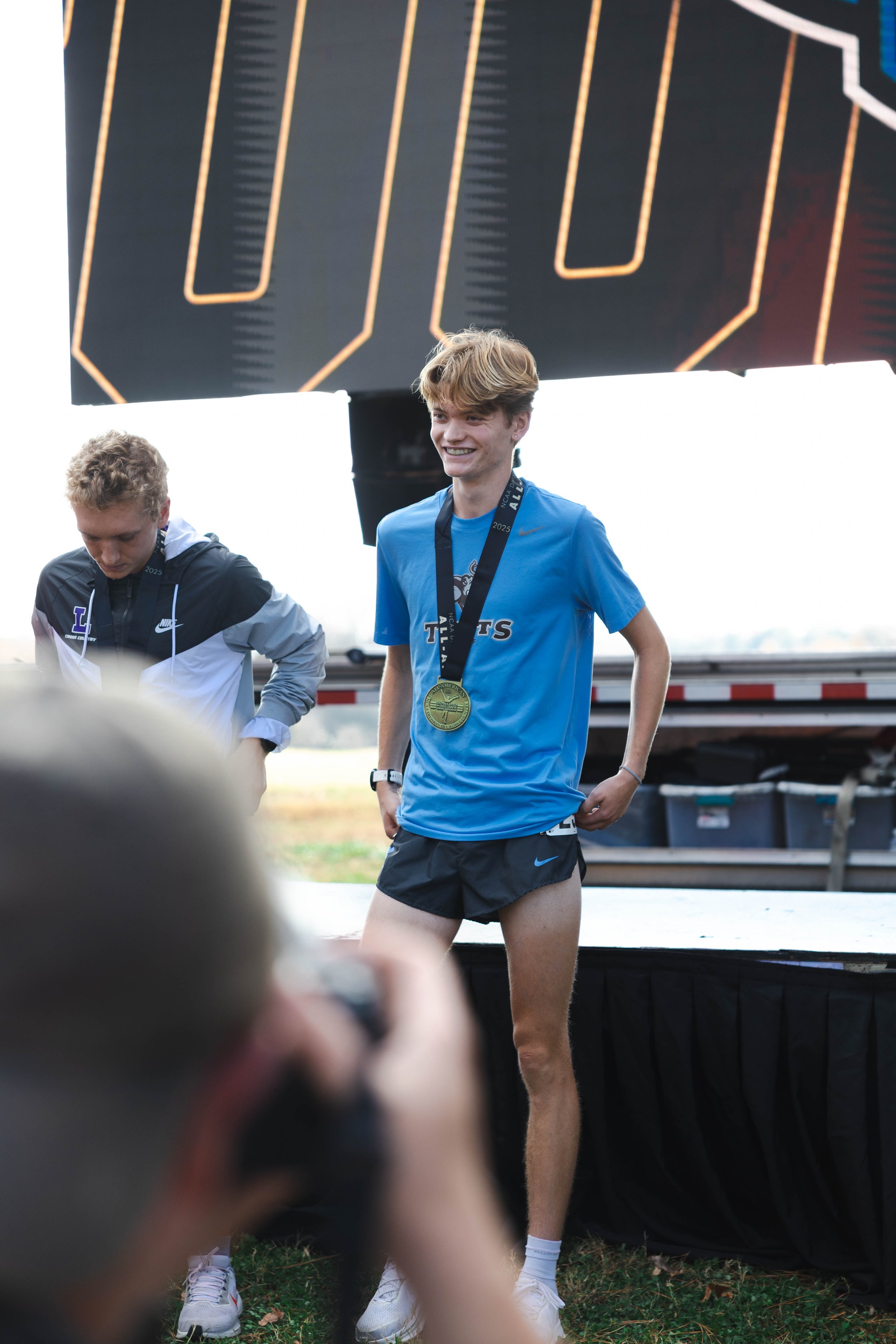
Photo by Jen Reagan
Evidence of the current setup working was on full display this fall, when Tufts men rose to be one of the top cross country teams in the country, taking down ranked NYU and SUNY Geneseo at the Connecticut College Invitational during the regular season and winning the NESCAC championship title for the first time since 2012 in a program record low score of 30 points. They went on to bag two All-Americans and place seventh overall at nationals, which was, again, the team’s best finish since 2012 .
The women’s team won its second East regional title in school history, earning them an automatic bid to the national meet over favorites MIT. At nationals, they placed 11th overall led by first-time XC All-American Liz Donahue. Seventh place for the men and 11th for the women made the best combined cross country program performance finish in Tufts history.
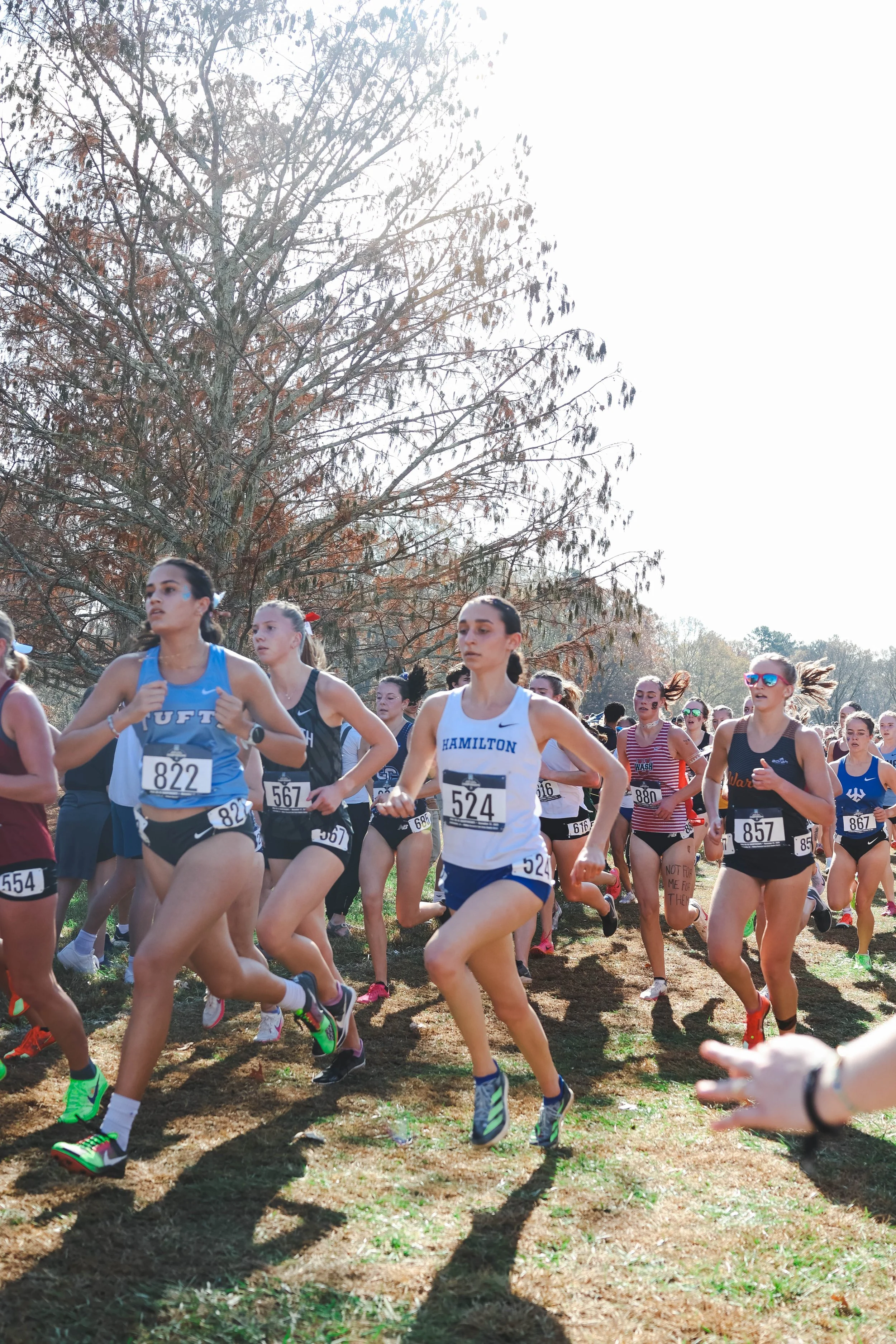
Photo by Jen Reagan
The last time Tufts saw themselves in this position, Norton was an athlete on the team in 2012. He did not get to compete on the national team, but he made the drive to Terre Haute to watch what would be Tufts’s greatest accomplishment until he would hold the program reins 13 years later. As an alum, he sees a lot of parallels between the team he was a part of and the one he now heads in terms of strong senior leadership and focus, but his experience coaching at other D3 powerhouse programs Williams and North Central have inspired how he does not just want to create greatness, but cement it.
“When you look at both the men and women, our best stretches in terms of national finish have then been followed by some not-so-great stretches,” Norton said. “To me, the mark of a great program is not just one-off success, but sustaining it over time.”
Norton recalls that his team placed 17th at nationals his senior year following their seventh place finish, then dropped to the low twenties for a few years, and eventually, did not make the cut for nationals several years after that. Now in a position where history is seemingly repeating itself, Norton is determined to write a different future for the Jumbos.
“It’s been a lot of trying to shift the culture of the team, raise the overall level of expectation that we have for ourselves, and see ourselves as a program that can be one that sustains really high-level success within Division III,” Norton said.
Just like some of the programs he was exposed to early in his coaching years, Norton believes there’s no reason why Tufts can’t be one of the best teams in the division, too.
“I think there’s a lot to be said for the institutional legacy, self-belief, and expectations that come from some of these programs that have been doing it for 40, 50 years,” he said. “That’s the kind of level of culture, self-belief, and expectation that we’re really trying to bring here now as well because we have everything in place here to do that. It’s just about helping our athletes see that.”
Though seventh was Tufts men’s highest place at nationals in over a decade, their finish in the fall left a lot more to be desired, especially after having beat podium finishers SUNY Geneseo and NYU earlier in the year. Norton acknowledges that both those programs have shown consistency at the highest level for a sustained period of time, which is where he hopes to see Tufts going in the years to come.
“I’m already super fired up about who’s going to step up to fill the shoes of these great seniors next year,” Norton said. “I think we have a lot of folks that are kind of behind the scenes right now that are ready for that.”
He added that he can’t wait to bring the culture and success that both teams had in the fall into the indoor and outdoor track season, describing the track group as “frickin’ awesome.”
Norton said he’s received numerous messages from alumni friends and peers expressing excitement over the Jumbos’ already achieved success, particularly when the men won the NESCAC meet, a meet with historic emphasis placed upon it during the season. As an alum himself, he recognizes how important Tufts is to its graduates and sees himself as a bridge connecting tradition to the current and next generations.
“I ate in the same dining halls and was a part of the same team traditions that happen outside of practice, and it’s cool to see all of that evolve over time but still be true to a lot of traditions that have been passed down for a long time,” Norton said.
As only someone who’s lived through it fully knows, Norton shows how these traditions can make an impact that extends well beyond someone’s four years at Tufts.
“Our goals go beyond just performance on the course seeing how meaningful this team has been to so many people in their lives, how many relationships and marriages that have come out of it,” Norton said.
The goal of Tufts moving forward is to carry on the torch, a torch that shines a little brighter in the hands of an alum.
“I really hope that over time we can build a really great connected community of student-athletes and alums and have people feel like they’re connected to something bigger than themselves,” Norton said.
Though he may not have known it as he whizzed around the track in his Tufts blue and brown, Norton was laying the connecting foundation. With lived history on his side, he raises the bar on what it means to be a Tufts Jumbo.